Bipartisanship in Action: NCSL Showcased States Leading on Tech
Author: Grifynn Clay, VP of Government Relations
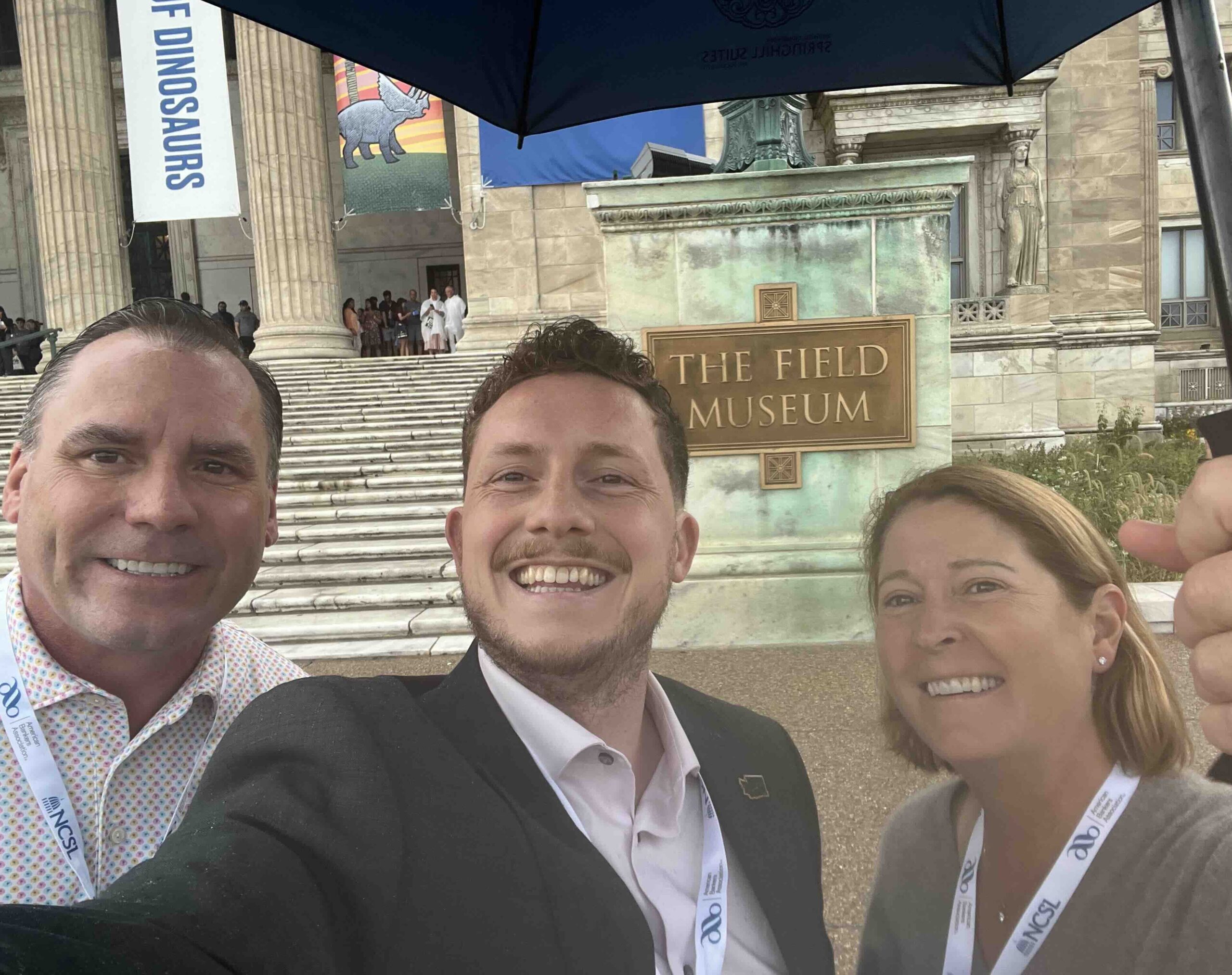
In late July of 2026, I attended my first National Conference of State Legislatures (NCSL) Legislative Summit in Chicago. It was a crucible of legislators, staff, and advocates from all over the United States and territories – Republicans and Democrats alike – coming together to stand above the DC gridlock and compare notes on what’s actually working back home. If you needed a reminder that governing and delivering for your neighbors is still possible in this country, this was it.
What struck our team most was the tone of the conference. Across panels on energy, healthcare, college athletics, and technology, the conversations were substantive, respectful, and refreshingly free of the performative partisanship that too often dominates headlines. Legislators disagreed plenty, but they disagreed like people who understood they were public servants first, seeking to solve the same problem from different angles. In a moment when the federal government seems stuck, NCSL was a reminder that states don’t have the luxury of waiting around, they have constituents to serve now.
This sense of urgency was particularly clear in the conference’s programming on artificial intelligence and technology.
Tuesday’s opening general session treated us to a candid, sobering conversation on AI featuring Geoffrey Hinton, the University of Toronto professor and 2024 Nobel Laureate widely known as the “Godfather of AI.” He told a packed ballroom that lawmakers need to keep working to regulate AI even as industry warns that regulation could slow innovation. He was blunt about the risks of job displacement, concentrated corporate power, and the erosion of state tax bases if AI-driven automation isn’t met with real policy attention. He compared AI to a car already well in motion. Attendees were encouraged to view regulation not as a hindrance but as a steering wheel to make sure it gets us somewhere we want to be. It was a non-partisan assessment, free of sugar-coating, which legislators were better off for hearing. Hinton’s message encouraged legislative bodies to stay ahead of a generation-defining technology that’s evolving every day.
The appetite for these conversations was obvious. AI and technology policy were clearly front of mind for attendees all week, so much so that I couldn’t even get into the room for “AI and the Future of Work,” one of the week’s most popular sessions. Packed rooms for tech programming and infrastructure were commonplace, and it said a lot about where state legislators’ attention is right now.
That urgency carried into a later session on federal tech trends, where Connecticut Senate Deputy Majority Leader James Maroney offered a case study in what iterative policymaking looks like.
Connecticut has revisited and amended its data privacy law nearly every year since its first passing- adjusting for new technology, new risks, and new gaps lawmakers didn’t anticipate the first time around. It’s a model other states could be emulating. With the pace that technology continues to develop, we need to treat privacy, AI, and other tech-related laws as living frameworks. This iterative process fosters an environment where these technologies can continue to develop in a way that enhances prosperity for all and avoids negative second order effects for constituents and the business community.
That’s the through-line of NCSL’s own policy advocacy this year, too. The organization has been vocal about protecting states’ ability to legislate for their own communities in a way that works to balance their many goals for economic and social benefit. These efforts reflect the argument that states are the labs where policy – including on AI, privacy, and cybersecurity – gets tested and refined.
For those of us who work at the intersection of business, politics, culture, and community, NCSL was a useful reset. It is easy to get pulled into the noise of federal dysfunction and lose sight of what change we can affect closer to home. The real, durable policymaking on AI, privacy, and technology is happening in statehouses, often on a bipartisan basis and often faster than the federal process allows. That’s where the action is, and it’s where S360 will keep showing up.