The February 10, 2026 Special Election reinforced trends we have been tracking in statewide research for several years: Washington voters still support public education, but they are more deliberate about how and why they invest.
When we compare these outcomes to statewide research conducted in partnership with Piper Sandler, a clear pattern emerges. Voters are not turning away from public education. They are becoming more selective, more cost-conscious, and more focused on outcomes.
For districts planning future measures, the lesson is to strengthen your year-round engagement strategies.
The Research Trends Behind the Results
Our statewide survey of registered voters found:
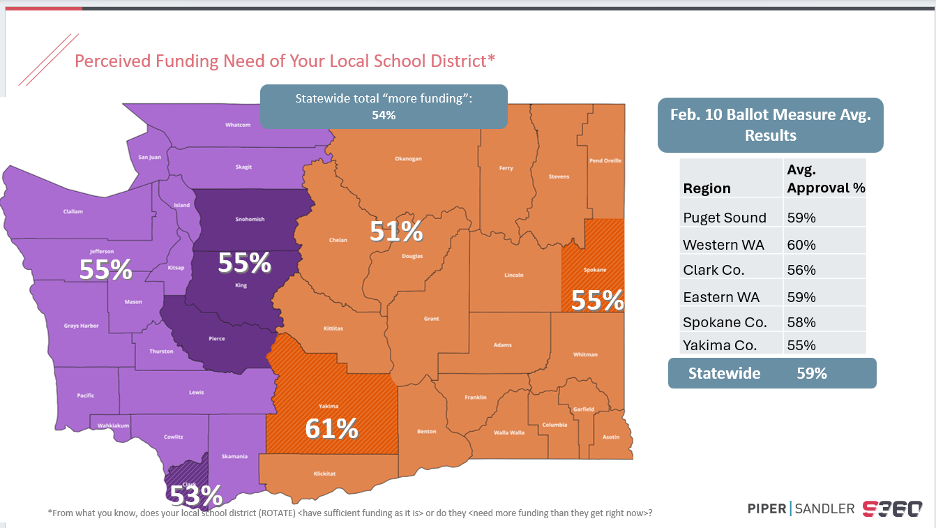
- 54 percent believe their local district needs more funding
- 62 percent believe local property taxes are too high
- Transparency and communication are the top drivers of trust
This tension between funding need and tax sensitivity defined the February ballot. Voters are willing to invest, but they expect clarity in return. Bridging this gap requires an integrated strategy that connects research to messaging to channels and year-round engagement.
February’s election results reflected S360’s research trends and findings almost exactly. The clearest takeaway is that voters continue to recognize the need for school investment, especially through levies, but growing tax sensitivity and higher expectations for accountability make the communications of the details of each proposal more important than ever.
What the Approved Measures Had in Common
The S360 team was proud to support 12 school districts and successful passage of 21 measures, securing nearly $4 billion for over 121,000 students.
When we look at districts where bonds and levies were approved, the communications playbook is consistent and follows a “Need – Plan – Accountability” structure. Successful measures:
- Clearly explain why local funding is necessary and how it fits into Washington’s broader school funding structure. They often emphasize renewal or replacement when that’s the case, which lowers the temperature around tax concerns. They spell out exactly what the dollars will pay for — specific schools, projects, upgrades — instead of relying on broad phrases. And they address cost head-on, usually in plain language that helps voters understand what it means for them.
- Are all about clarity. Voters appear willing to support school funding when they understand the problem, see a defined solution, and feel confident the investment is responsible. In a tax-sensitive environment, communications that reduce uncertainty and build trust can make the difference between majority support and a supermajority win.
- Don’t stop after the election. In fact, districts who regularly share updates about past funding and plans for future funding show increased trust among their communities.
What This Means for District Leaders
Successful measures are grounded in:
- Messaging that reflects local priorities. Baseline opinion research to understand funding sentiment and tax sensitivity means your messaging will accurately reflect what your community thinks
- Clear articulation of specific projects and outcomes
- Year-round communication that reaches beyond families
Looking Forward
February confirmed that Washington communities are willing to invest when they understand the why, the how, and the impact.
From baseline research and message testing to creative development, digital strategy, stakeholder engagement, and ongoing communications planning, our team partners with districts to build the systems that support successful measures. If you’re beginning to think about your next levy or bond, we’d welcome the conversation. Contact us at edteam@strategies360.com